One failed audit. One contamination event. One unexpected line stoppage in the middle of a production run. In food manufacturing, the costs can escalate fast—scrapped product, lost shifts, emergency sanitation, and reputational damage that lingers long after the issue is fixed.
Here’s the uncomfortable truth: standard chrome steel bearings and housings aren’t designed for food-grade reality—high moisture, aggressive detergents, daily washdowns, and strict hygienic expectations. They corrode, they seize, they shed rust, and they become a hidden risk inside otherwise “clean” systems.
The strategic fix isn’t just “better bearings.” It’s specifying NSF-grade stainless steel bearing units that are engineered for washdown environments and built to support HACCP compliance, uptime, and long-term maintenance efficiency.
Food safety isn’t only about your recipe and sanitation SOPs—it’s also about the mechanical components that sit directly in your splash zones, rinse zones, and high-risk areas.
HACCP programs demand you identify contamination hazards—including physical contamination (rust flakes, metal debris) and lubrication risks.
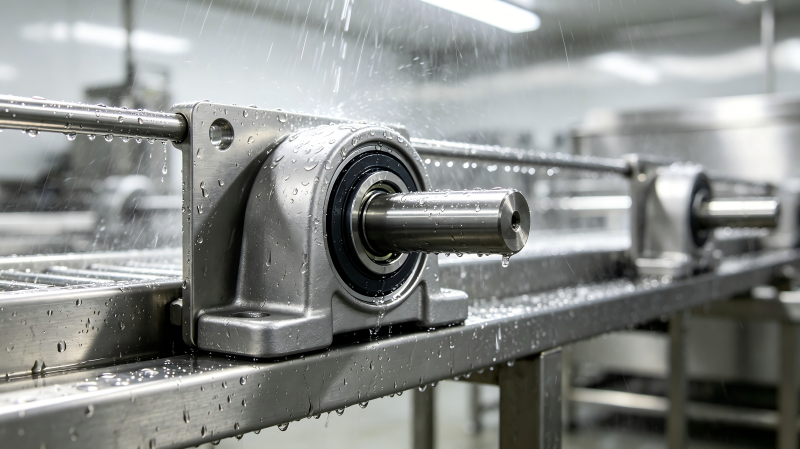
Bearings live in the exact places inspectors scrutinize: conveyors, mixers, packaging lines, and washdown areas where water and chemicals are constant.
Even when bearings are not intended for direct food contact, the real world includes incidental contact risk—drips, aerosols, overspray, and maintenance mistakes. That’s why NSF H1 food-grade grease matters: it is designed for situations where incidental contact could occur.
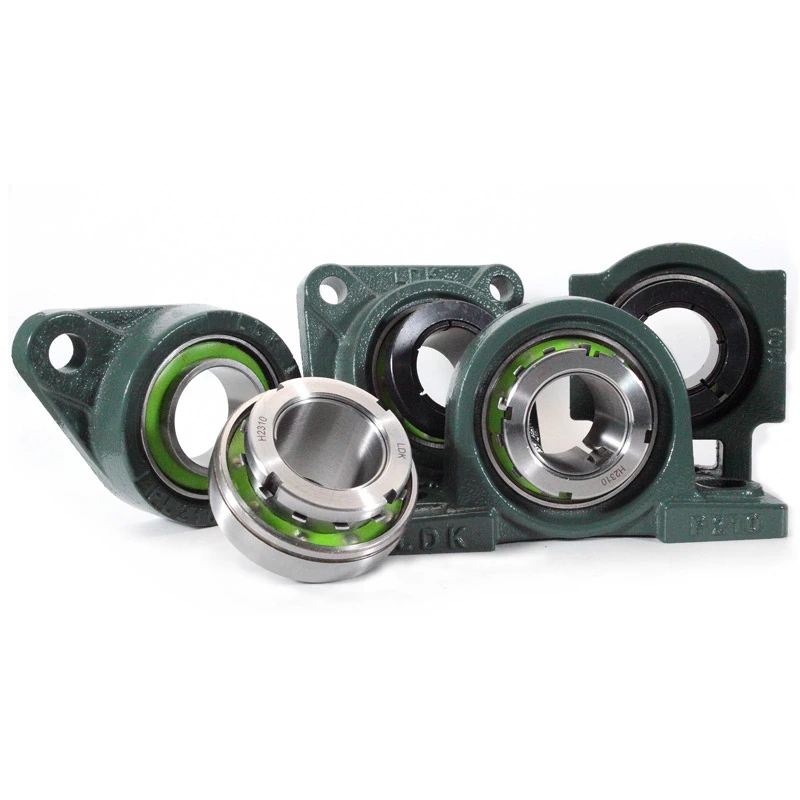
LDK stainless steel bearing units are pre-filled with NSF H1 food-grade grease, helping you reduce risk and simplify documentation when you’re aligning equipment specs with your food safety plan.
Tip for maintenance teams: pre-filled, food-grade lubrication can also standardize PM schedules and reduce the chance that the wrong grease is applied during a shift change.
Washdown destroys components in ways that look “random” on paper—but predictable in the field. If your team is seeing bearings fail prematurely, it usually isn’t because loads are too high. It’s because water + chemicals + time is a brutal combination.
Frequent high-pressure washdowns push water and caustic agents into seals. Over time, that leads to:
corrosion pitting on raceways
degraded lubrication viscosity and film strength
seal hardening, swelling, or tearing
increased vibration, heat, and eventual seizure
High-performance stainless steel bearing units solve washdown failure points using the right metals in the right places:
300 series austenitic stainless steel housings (e.g., 304 stainless steel housing) deliver strong corrosion resistance for external exposure.
400 series martensitic stainless inserts (commonly 440C martensitic bearings) provide the hardness and load capability needed for rotating performance.
This combination matters: austenitic stainless steels excel in corrosion resistance, while martensitic stainless steels provide the strength and wear properties your rotating insert needs.
In food plants, geometry is safety. Designs that trap residue invite microbial growth—especially where moisture persists after washdown.
LDK emphasizes a solid base design to reduce crevices and “dead zones,” supporting more hygienic outcomes in washdown and food zones.
If you manage maintenance in a food facility, you already know the hidden cost isn’t the bearing—it’s the cascade:
unplanned downtime
labor hours for changeouts
sanitation rework
line restart validation
spare parts inventory pressure
Cheap units often look acceptable until you calculate the full replacement cycle.
A good stainless steel bearing solution should reduce hands-on time, not add complexity. LDK’s approach focuses on extending service intervals through:
silicon rubber seals (improved sealing performance in washdown conditions)
specialized lubrication retention (keeping grease in, keeping contaminants out)
Result: fewer re-lube events, fewer emergency replacements, and more predictable PM planning—especially valuable when your team is stretched across multiple lines.
Selecting the right bearing unit isn’t only a corrosion decision—it’s also an application decision. The “best” unit depends on mounting style, cleanability, load direction, and exposure severity.
Pillow block units are a common conveyor choice when you have a supportive base and straightforward alignment needs.
Flange units can be ideal where mounting space is limited or where the shaft needs wall/side mounting support.
For food zones, solid base designs are often preferred because they reduce voids and crevices where:
standing water collects
proteins/fats accumulate
bacteria can persist between cleanings
If you battle debris ingress, overspray, or chemical intrusion, consider:
end caps to shield exposed shaft ends
back seals to add a second barrier against washdown ingress
These upgrades are small compared to the downtime cost of a seized insert during peak production.
| Feature | Standard Bearings (Chrome Steel) | LDK Stainless Steel Bearing Units |
|---|---|---|
| Rust resistance | Low in wet/chemical areas | High for washdown exposure |
| Hygiene risk | Higher (corrosion, flaking) | Lower (washdown-ready materials) |
| Washdown survivability | Often short lifespan | Designed for harsh washdown cycles |
| Lubrication safety | Varies; risk of wrong grease | Pre-filled with NSF H1 food-grade grease |
| Maintenance workload | Higher (frequent changeouts) | Reduced downtime and service frequency |
Switching to stainless steel bearing units is not a luxury upgrade—it’s a food safety and uptime decision that pays back through fewer failures, fewer stoppages, and cleaner audits.
LDK brings long-term manufacturing credibility to that decision with:
company history since 1986
IATF 16949 certification
end-to-end manufacturing control (housing + insert), improving consistency and quality assurance
Protect your plant’s reputation. Explore our full range of stainless steel bearing units or contact our engineering team for a custom solution.
Yes—316 stainless is often chosen for improved chemical resistance (especially chlorides). However, there can be trade-offs: 316 typically does not match 440C’s hardness/load-wear performance, so the best choice depends on your washdown chemistry, loads, speed, and expected service life.
Not always. “Washdown-resistant” is sometimes used loosely. Verify:
housing material (304/316 stainless vs coated metal)
insert material (e.g., 440C martensitic)
seal type and grease specification (NSF H1)
hygienic geometry (reduced crevices/dead zones)
In general:
SSUCP200 aligns with pillow block-style mounting
SSUCF200 aligns with flange-style mounting
For exact sizing, load direction, and shaft fit, match the series to your mounting constraints and application loads—and confirm exposure zone requirements with your QA/HACCP team.