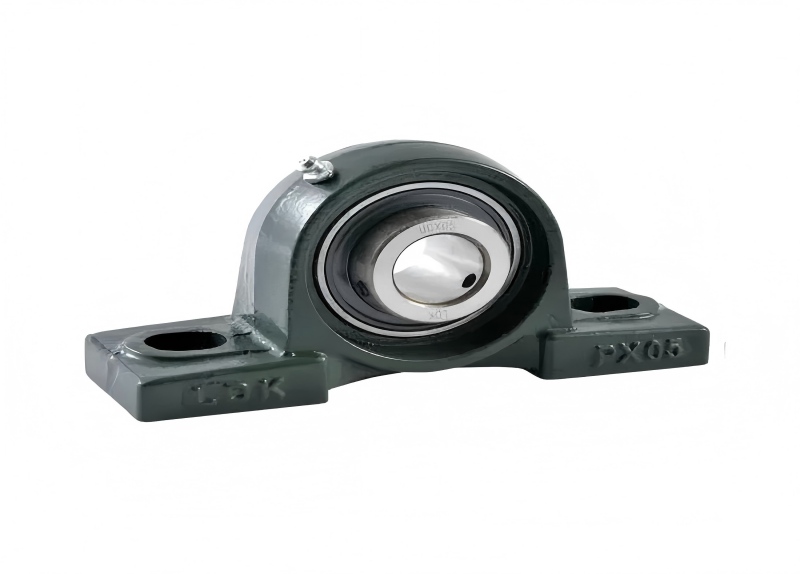
In fluid power systems, the mechanical integrity of an articulating linkage relies heavily on its terminal connections. When a hydraulic cylinder exerts massive linear force, that energy must be transferred safely to the driven load. This crucial intersection is where the hydraulic cylinder rod end bearing operates.
Selecting the correct component from the available hydraulic cylinder rod end types is a critical engineering decision that dictates the lifespan, maintenance frequency, and safety of the entire machinery setup. Choosing an incorrect configuration leads to premature failure, costly downtime, or structural fatigue under high alternating loads.
A hydraulic cylinder rod end is a heavy-duty mechanical assembly engineered to bridge the gap between a cylinder's moving piston rod and its structural payload. Unlike standard commercial rod ends used in light-
duty steering linkages, these components are purpose-built to withstand extreme hydraulic pressures, heavy shock loads, and high cyclical vibrations.
The physical anatomy of a modern hydraulic cylinder rod end bearing consists of two primary elements integrated into a single unit: an outer housing designed to handle high tensile forces, and an internal spherical plain bearing. This internal bearing accommodates multi-directional self-alignment, allowing the machine to tolerate minor angular misalignment without binding.
To ensure the internal spherical plain bearing remains stable under severe thrust loads, manufacturers utilize high-strength snap rings to lock the bearing securely inside the housing bore. This snap-ring retention method allows the component to absorb immense axial and radial forces simultaneously. Furthermore, because these assemblies utilize a steel-on-steel sliding material combination, they are specifically designed as a type requiring periodic re-lubrication. This ensures a fresh film of grease always shields the high-strength sliding surfaces from friction.
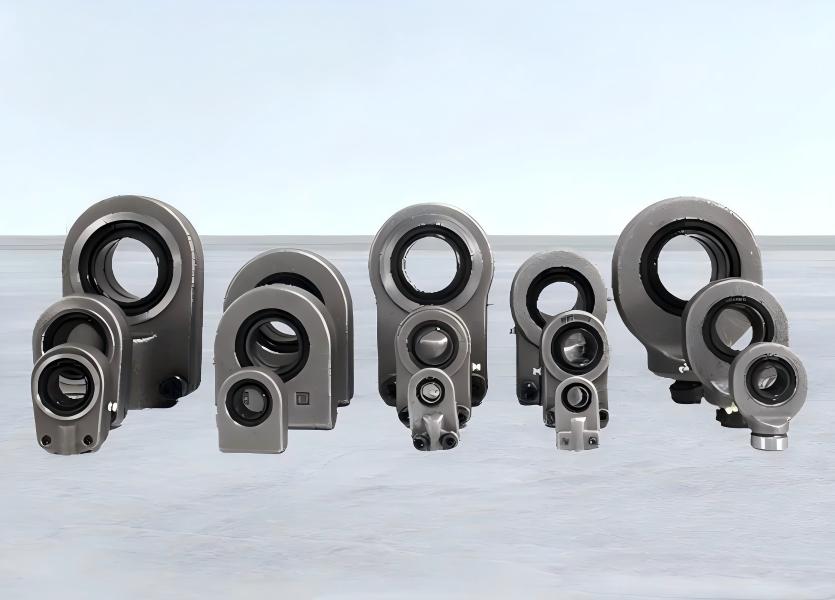
The welding shank design represents one of the most robust options among the primary hydraulic cylinder rod end types. This style features a solid, unthreaded shank at its base, specifically engineered to be permanently fused to the cylinder rod or base through industrial welding.
The primary design characteristic of a welding shank rod end is its heavy-duty weldable steel housing. Manufacturers select specific grades of forged carbon steel that exhibit excellent weldability and high fracture toughness. The base of the shank is typically machined with a flat or beveled circular surface, providing an ideal preparation zone for full-penetration welding. Because there are no internal or external threads machined into the shank, the cross-sectional area remains completely solid, maximizing structural integrity.
Unmatched Tensile Strength: By eliminating threads, the housing removes potential stress concentration points where fatigue cracks typically propagate.
Compact Structural Profile: The absence of external locking bolts, slots, or wide clamping collars allows the welding shank design to maintain a streamlined profile, ideal for tight mechanical spaces.
Permanent Reliability: Once welded, the joint becomes a single, homogenous piece of steel. There are no components that can back out, strip, or shake loose under relentless vibrations.
For industrial applications where mechanical adjustability and straightforward component replacement are critical, the locking slot design is often the preferred choice among hydraulic cylinder rod end types. This configuration relies on a mechanical clamping method rather than a permanent weld to secure the connection.
A locking slot hydraulic cylinder rod end bearing features a female-threaded shank machined into a mild steel or high-tensile ductile iron housing. The defining characteristic of this design is a vertical slot machined completely through one side of the threaded shank. Perpendicular to this slot, the housing features integrated clamping collars equipped with high-strength bolts or locking nuts.
When this rod end is threaded onto the piston rod, the technician can adjust its position along the threads to fine-tune the overall length of the cylinder assembly. Once the precise position is reached, the clamping bolts are torqued to specifications. This action pinches the slot closed, compressing the internal female threads tightly around the male threads of the piston rod.
Precision Length Adjustability: Threaded locking slot rod ends allow for precise axial positioning during installation to correct manufacturing tolerances or optimize stroke limits.
Simplified Maintenance and Replacement: Replacing a worn bearing does not require grinding, cutting, or re-welding. A technician simply loosens the clamping bolts, unscrews the old unit, and threads on a replacement.
Superior High-Vibration Resistance: The dual-action clamping mechanism of the locking slot creates uniform radial pressure across the threads, ensuring the connection remains secure against cyclical vibrations.
When selecting between these two dominant hydraulic cylinder rod end types, mechanical engineers must balance operational priorities regarding load distribution, installation labor, and long-term serviceability.
The welding shank configuration excels in applications involving raw power and structural permanence. Because the connection is fused, it handles heavy loads of alternating direction exceptionally well, as there are no thread flanks to wear down over millions of cycles. However, the initial installation requires skilled welding labor, and replacement requires a labor-intensive cutting process.
Conversely, the locking slot configuration trades absolute material cross-section for operational flexibility. It is the ideal choice for modular machinery designs where components must be serviced quickly in the field. While the housing material is durable, the threaded interface introduces tiny stress risers, requiring careful torque monitoring during routine maintenance.
| Performance Attribute | Welding Shank Type | Locking Slot Type |
|---|---|---|
| Connection Permanence | Permanent (Fused via Industrial Welding) | Removable (Threaded and Mechanically Clamped) |
| Housing Material Type | Forged Weldable Carbon Steel | Mild Steel / High-Tensile Ductile Iron |
| Adjustability Range | None (Fixed during welding) | High (Axial thread engagement adjustment) |
| Vibration Resistance | Absolute (No mechanical parts to loosen) | High (Maintained via threaded clamping slots) |
| Replacement Labor | High (Requires cutting and re-welding) | Low (Requires standard mechanical tools) |
| Ideal Load Envelope | Extreme static and heavy alternating loads | High-frequency cyclical and vibrating loads |
To select the perfect hydraulic cylinder rod end bearing for an industrial application, engineering teams should follow a structured evaluation matrix.
First, analyze the nature of the mechanical load. If the cylinder is integrated into heavy earthmoving machinery, mining equipment, or heavy steel stamping presses that subject the linkage to alternating forces, a welding shank type provides the necessary structural integrity. If the application demands precision positioning—such as in automated manufacturing lines—the adjustable nature of the locking slot type is better suited.
Second, consider maintenance access. Because hydraulic applications involve steel-on-steel sliding surfaces, periodic re-lubrication is mandatory to prevent galling. Ensure that the chosen rod end type features easily accessible grease nipples.
Finally, align the component dimensions with recognized international standards to simplify future procurement. Ensuring that your rod ends strictly adhere to standard ISO dimensions allows for seamless interchangeability, protecting your supply chain from unexpected disruptions.
Selecting the right connection among the various hydraulic cylinder rod end types is a fundamental step in optimizing the performance of high-pressure fluid power systems. Whether an application demands the permanent characteristics of a welding shank design or the adjustable features of a locking slot configuration, understanding these technical differences ensures your machinery operates safely under demanding loads.
As a high-tech enterprise with over 30 years of manufacturing experience, LDK Bearings provides engineered solutions tailored to global OEM requirements. Operating from a 100,000 square meter production facility equipped with advanced laboratories and precision testing rooms, the company manufactures a wide array of high-quality linkage components. To explore standard options or discuss custom material combinations for specialized industrial machinery, engineers and procurement managers can browse the comprehensive LDK Bearings Product Catalog or consult directly with our technical team via the Contact Page for expert selection support.
Hydraulic rod ends feature a steel-on-steel sliding surface designed to handle extreme static and alternating heavy loads. Without regular grease application through integrated grease nipples, this direct metal-on-metal contact causes high friction, heat buildup, and rapid wear.
Loss of clamping force is usually caused by insufficient initial torque on the locking bolts, severe high-frequency structural vibration, or material fatigue over extended operational cycles. Routine maintenance checklists should always include verifying bolt torque specifications.
No, welding a locking slot rod end is not recommended. These units are typically manufactured from mild steel or ductile iron housings, which do not share the same weldable metallurgical properties as specialized welding shank housings, leading to brittleness and failure.
High-strength snap rings are installed into machined grooves inside the housing bore to mechanically secure the internal spherical plain bearing. This design prevents the bearing from shifting or walking out of the housing when subjected to heavy axial thrust loads.