
In mechanical engineering and industrial automation, translating movement between linear actuators, control rods, and pivoting machine structures requires specialized articulating joints. Components must handle continuous operational stress, adapt to structural deflection, and permit smooth multi-axis movement without causing mechanical binding. Among the most critical hardware components specified to solve these spatial challenges are rod end fittings.
By acting as a flexible bridge between moving mechanical links, these joints ensure efficient force transmission across diverse machinery, from agricultural steering linkages to automated material handling lines. This article provides a technical breakdown of their structural anatomy, thread variations, and industrial uses, while clarifying how they compare to alternative connection components like a rod end clevis joint.
To understand why rod end fittings are indispensable in mechanical design, it is helpful to visualize their internal and external construction. A standard unit integrates two distinct mechanical elements into a single, high-strength hardware component:
The Outer Housing (Body): This structural shell is typically manufactured from forged carbon steel, stainless steel, or lightweight aluminum alloys. One end of the housing extends into a shank featuring either an external male thread or an internal female thread. This threaded portion is designed to screw directly onto control rods, tie bars, or pneumatic cylinder piston shafts.
The Spherical Plain Bearing Insert: The opposite end of the housing features a precise circular bore that securely contains a spherical plain bearing. The inner ring of this bearing is a truncated sphere (the ball) nestled within a matching concave outer race (the socket). The spherical ball can pivot and rotate freely in multiple directions within the housing.
The Center Bore: A precision-machined clearance hole passes completely through the center of the spherical ball. This hole accommodates a mounting bolt, pin, or clevis pin, anchoring the articulating joint firmly to the driven mechanical structure or bracket.
This clever combination allows a rod end to function similarly to a biological joint. While the threaded shank forms a rigid connection along the axis of a rod, the spherical eyelet allows the attached machine component to rotate, tilt, and pivot smoothly through a defined angular range.
Choosing the correct structural configuration is essential for seamless mechanical integration. Manufacturers produce these components in two primary genders based on the threaded connection interface:
Male Configuration: This style features an external threaded shank extending outward from the main spherical housing. It is designed to screw directly into components with matching internal threads, such as female-threaded structural tubes, adjustment turnbuckles, or internal cylinder rod holes. This layout is common when a compact axial footprint is needed.
Female Configuration: This style features a hollow shank with precision internal threads machined inside the base of the housing. It screws onto external male threads, such as those found on standard threaded bars or male-threaded actuator rods, making it straightforward to install and adjust in the field.
| Configuration Style | Thread Interface | Primary Attachment Method | Common Industrial Layout |
|---|---|---|---|
| Male Type | External Male Thread | Screws into internal threaded bores or couplings | Rear cylinder mounts, embedded linkages |
| Female Type | Internal Female Thread | Screws onto external threaded shafts or rods | Actuator rod tips, standard linkage ends |
The vocabulary surrounding articulating joints can be confusing, as different regions, industries, and manufacturers use overlapping terms. Clarifying these mechanical distinctions helps ensure accurate component procurement:
Spherical Plain Bearings: This term refers strictly to the internal "ball and socket" component itself, without an outer structural housing or threaded shank. A rod end is a complete structural assembly that uses a spherical plain bearing as its internal core.
Heim Joints: This is a popular colloquial term used primarily in North America, named after the company that patented the design during World War II. In modern engineering contexts, a Heim joint is identical to a standard male or female rod end fitting.
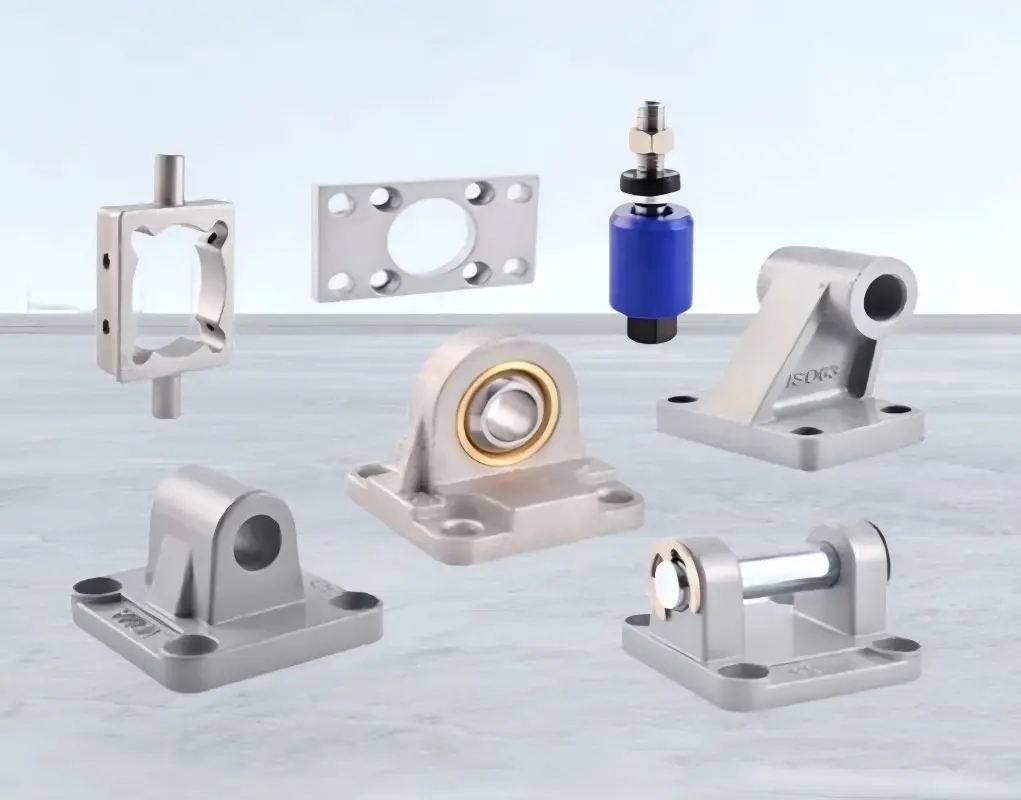
Rod End Clevis Joint: It is crucial not to mistake a standard rod end for a rod end clevis joint. A traditional clevis features a rigid, U-shaped fork configuration that connects via a straight pin to a single eyelet. While a clevis configuration offers exceptional shear strength, it restricts motion strictly to a single primary plane. Conversely, a standard spherical rod end allows for multi-directional, orbital self-alignment across multiple geometric planes simultaneously.
Because these components solve the fundamental engineering challenge of structural misalignment, they are widely used across diverse industrial sectors:
Fluid Power Actuation: In pneumatic and hydraulic cylinder systems, installing a rod end at the tip of the piston rod protects internal cylinder seals. It absorbs minor side loads caused by arc-trajectories, preventing the rod from bending.
Steering and Suspension Linkages: Agricultural tractors, commercial vehicles, and off-road equipment utilize heavy-duty spherical fittings on steering tie-rods and anti-roll bars, allowing wheels to steer smoothly while moving over uneven terrain.
Industrial Automation: High-speed packaging systems, robotic arms, and sorting conveyor mechanisms rely on self-lubricating, maintenance-free fittings to execute rapid, high-frequency movements with minimal mechanical play.
Understanding the structural design, thread variations, and functional benefits of rod end fittings allows engineers to design mechanical linkages that run smoothly, tolerate minor misalignments, and avoid premature structural wear. Recognizing when to specify a multi-axis spherical joint versus a single-plane rod end clevis joint ensures that your system geometry matches its real-world load conditions perfectly.
With more than 30 years of advanced manufacturing experience, LDK Bearings delivers high-quality, customer-oriented linkage solutions for global industrial markets. Operating from an expansive 100,000 square meter production facility fitted with precision testing laboratories and state-of-the-art measuring equipment, we manufacture durable mechanical components tailored to withstand severe operational loads. To browse our standard product offerings or request custom material options for specialized machinery, explore the LDK Bearings Product Catalog or contact our engineering support team directly via the LDK Bearings Contact Page for professional selection assistance.
A rigid connection transfers any minor structural misalignment or shaft deflection directly into the driving mechanism as a destructive side load. A rod end allows for multi-directional pivoting, neutralizing these lateral forces and ensuring only pure axial force travels through the linkage.
Specify a standard spherical rod end if the connecting mechanism moves through an arc or experiences multi-axis misalignment. Choose a rigid clevis joint if the path of travel is completely linear and restricted to a single plane, and your priority is maximizing shear resistance.
Maintenance-free units use an internal PTFE or composite liner sliding against a polished steel ball, making them ideal for high-speed, clean environments like food processing. Re-greasable types feature steel-on-steel sliding surfaces, which require regular lubrication but offer superior resistance against extreme dynamic shock loads.
Yes, high-frequency structural vibrations can cause standard threaded shanks to back out over time. To prevent this, engineers utilize specialized locking nuts, jam nuts, or split-shank housings with integrated clamping bolts to secure the threaded position permanently.


