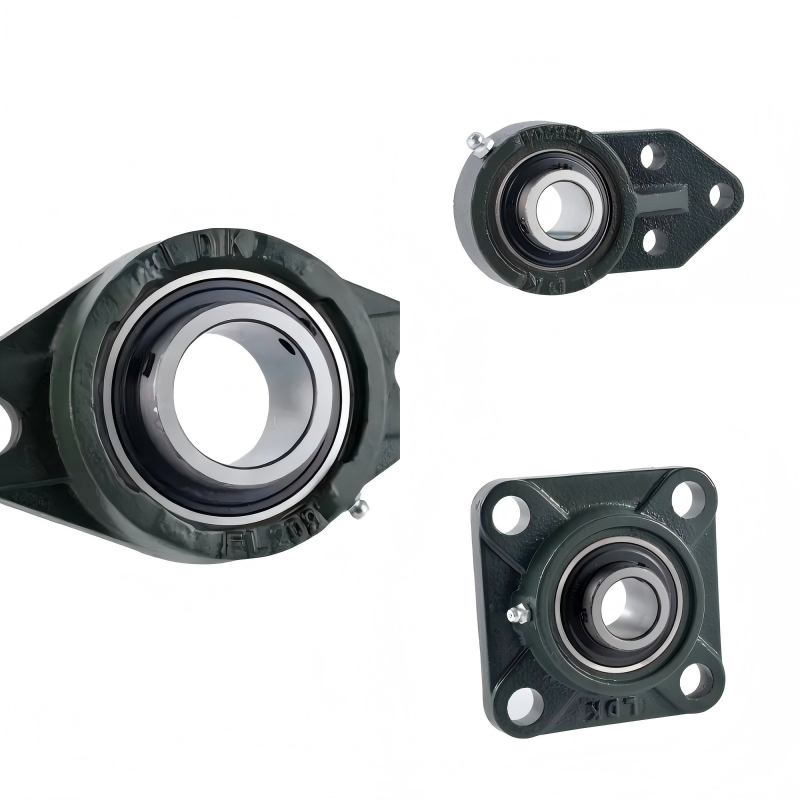
In heavy industrial environments, bulk material handling, and power transmission, keeping a conveyor system running smoothly requires precise tension control. Over extended periods of operation, heavy-duty belts and chains naturally stretch, which can cause component slippage, tracking issues, or sudden mechanical failure. To combat these forces, mechanical engineers rely on adjustable, specialized mounted assemblies called take-up ball bearing units.
Unlike standard flanged or pillow block assemblies that remain bolted in a fixed structural position, these units are specifically engineered to guide mobile shafts along a linear path. This capability allows operators to adjust tracking and maintain optimal belt tension on the fly. This article examines the core engineering characteristics, housing styles, and industrial uses of these essential power transmission components.
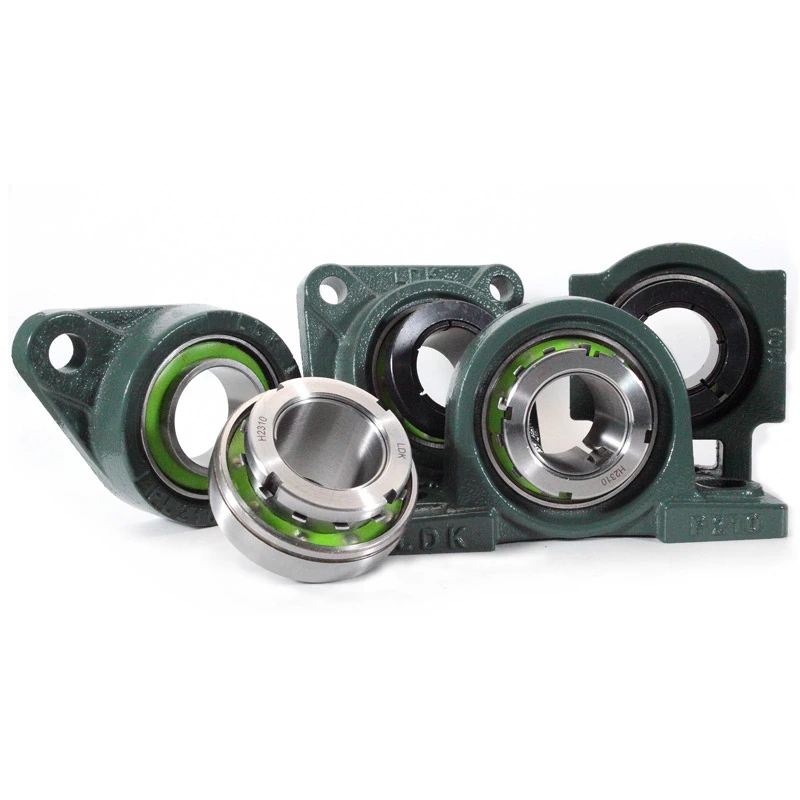
To understand the operational value of take-up ball bearing units, it helps to examine how their internal and external components work together. Every unit is a cohesive assembly designed to manage both rotating forces and linear tracking adjustments:
The Sliding Housing Frame: The most distinct feature is the take-up bearing housing. Unlike traditional stationary housings, this casting includes machined guide slots or grooves on its top and bottom surfaces. These slots align with a side-mount frame or guide rail, allowing the entire housing to slide back and forth when driven by an integrated positioning screw.
Spherical Bearing Inserts: Inside the housing bore sits a wider inner ring ball bearing insert. The outer diameter of this insert is spherical, matching a concave seat machined inside the housing. This layout gives the unit an inherent self-aligning ability, allowing it to compensate for minor static misalignment or shaft deflection without binding the rolling elements.
Shaft Locking Methods: Securing the bearing insert tightly to the rotating shaft is accomplished using robust mechanisms tailored to the speed and vibration of the application. Common methods include set screws, eccentric locking collars, adapter sleeves, and concentric locking collars.
Advanced Protective End Caps: Because these components frequently operate in dusty and abrasive environments, they can be equipped with pressed steel end caps or covers. These caps provide a reliable mechanical barrier against external pollution, moisture ingress, and fine particulate matter.
Industrial machinery configurations vary widely, which is why a take-up bearing housing is available in several distinct series tailored to specific load capacities and mechanical footprints:
T200 Standard-Duty Series: This represents the industry baseline for general industrial machinery. It balances a compact cast iron body with reliable load handling, making it highly effective for standard-speed production lines and light packaging systems.
TX Medium-Duty Series: Engineered with reinforced housing walls and thicker casting profiles, the TX series bridges the gap between everyday operations and severe-duty applications. It is frequently specified for intermediate bulk handling systems.
T300 Heavy-Duty Series: Designed for severe industrial operating conditions, the T300 series features massive cast iron dimensions. It accommodates larger shaft diameters and handles extreme radial loads and high-impact forces without risk of structural cracking.
ST200 Wide-Slot Series: This variation features wider machined guide slots along the housing edges. The wide-slot profile accommodates heavier structural steel guide rails, providing increased frame stability in high-torque or vibrating systems.
Because these units combine heavy-duty rotation support with smooth linear adjustment, they are widely used in material handling and bulk transport systems:
Conveyor Belt Tensioning: In long belt conveyors, the belt naturally stretches over time due to temperature fluctuations and structural loads. Installing these units at the tail pulley allows operators to turn a tensioning screw to pull the shaft backward, restoring proper tension and preventing belt slippage.
Pulley and Roller Alignment: If a conveyor belt begins to track off-center, it can rub against the frame and tear. Placing adjustable housings on both sides of the pulley shaft lets maintenance teams make precise, independent micro-adjustments to straighten the roller axle and correct the tracking path.
Industrial Bucket Elevators: Vertical bucket elevators lift heavy bulk materials like grain, cement, or aggregate. The high vertical weight strains the internal chains or belts. High-capacity tensioning units at the base of the elevator tower help maintain correct tracking and vertical stability under full load.
Chain and Sprocket Drives: Large industrial chain drives require precise slack management to prevent the chain from jumping the sprocket teeth. Adjustable sliding housings allow for easy adjustments to tension the drive system as the chain links experience natural operational wear.
Selecting the right component configuration requires analyzing the environmental challenges and contamination risks of your specific application:
Grease Performance Attributes: The internal spherical ball bearing inserts are pre-filled with high-grade lubricants based on the operating environment. While standard lithium grease suits general automation, extreme environments require specialized low/high-temperature lubricants to prevent oil separation.
Food-Grade Requirements: In food, beverage, and pharmaceutical packaging lines, the bearing assembly must be packed with certified food-grade grease. This ensures safety compliance in the event of incidental contact with the product line, while offering excellent resistance to water wash-downs.
Contamination Defense: For outdoor mining, aggregate sorting, or agricultural processing, airborne dust can penetrate standard rubber seals, mix with the grease, and form an abrasive paste that wears down the internal raceways. Specifying pressed steel end caps ensures abrasive grit is deflected before it can reach the internal seal lip.
| Performance Attribute | T200 Standard Duty | TX Medium Duty | T300 Heavy Duty |
|---|---|---|---|
| Housing Profile | Compact Cast Iron | Reinforced Cast Iron | Massive Extra-Thick Cast Iron |
| Load Capacity Envelope | Light to Moderate Radial | Intermediate Continuous | Severe Radial & Sudden Shock |
| Common Locking Types | Set Screws / Eccentric Collars | Set Screws / Adapter Sleeves | Adapter Sleeves / Concentric Collars |
| Environmental Target | Clean Automation / Packaging | Intermediate Bulk Logistics | Heavy Mining / Outdoor Aggregate |
From maintaining optimal tension on cross-country bulk conveyors to ensuring tracking precision in high-speed packaging facilities, take-up ball bearing units are essential for reliable power transmission. Correctly matching your application parameters—whether you require a standard T200 series for automated sorting or a wide-slot ST200 series for a heavy mining frame—ensures your mechanical systems operate with maximum efficiency and minimum downtime.
With over 30 years of advanced manufacturing experience, LDK Bearings delivers high-quality, customer-oriented linkage and mounted bearing solutions for global markets. Operating from an expansive 100,000 square meter production facility fitted with precision testing laboratories and state-of-the-art measuring equipment, we manufacture durable mechanical components tailored to withstand severe operational loads. To browse our standard product configurations or request custom material options for specialized machinery, explore the LDK Bearings Product Catalog or contact our engineering support team directly via the Contact Page for professional selection assistance.
A pillow block bearing features a mounting base with bolt holes designed to anchor the shaft rigidly to a fixed surface. A take-up unit features machined guide slots on its housing edges, allowing the entire assembly to slide along a guide frame to adjust shaft positioning and tension.
These units are primarily engineered to support radial loads and maintain linear tension. While the internal spherical insert can handle moderate axial thrust loads, applications facing extreme, continuous axial forces should utilize an alternate bearing configuration or a heavy-duty T300 series.
Conveyor shafts often experience minor structural deflection due to heavy material loads or slight frame tolerances. The self-aligning feature allows the internal ball bearing insert to pivot within the housing, accommodating this movement without increasing friction or accelerating wear.
Re-lubrication intervals depend heavily on operating speeds, temperatures, and environmental dust levels. Systems working in harsh outdoor mining environments may require weekly greasing through integrated grease nipples, while clean, indoor packaging systems operating under normal loads require less frequent maintenance.