
Pillow block bearings are essential components in countless industrial and mechanical systems, providing reliable shaft support while reducing friction and accommodating misalignment. Selecting the most suitable pillow block bearing material is critical for optimizing performance, longevity, and cost-effectiveness. This comprehensive guide explores various housing options, their properties, and how pillow block bearing design choices influence real-world suitability. Whether you're an engineer, maintenance professional, or procurement specialist, understanding these factors will help you make informed decisions that enhance operational efficiency.
Housing material is the primary consideration when choosing components for pillow block units, since the internal bearing insert is typically steel or stainless steel. Common options include cast iron, stainless steel, pressed steel, thermoplastics, and occasionally ductile iron or cast steel.
Cast iron remains the most widely used pillow block bearing material thanks to its excellent balance of strength, vibration damping, and affordability. Gray cast iron grades like HT200 or HT250 deliver solid compressive performance and suit general industrial needs.
Stainless steel housings perform exceptionally well in corrosive settings. They resist rust, chemicals, and moisture, making them ideal for food processing, pharmaceuticals, and marine environments. Although more expensive upfront, these units often provide longer service life under demanding conditions.
Pressed steel or stamped steel housings offer a lightweight, economical solution for lighter-duty tasks. Zinc plating enhances their corrosion resistance, and their design supports easy handling in high-volume production.
Thermoplastic housings (such as PBT or polyester) bring advantages in weight reduction and chemical compatibility. They work well in washdown areas or anywhere non-metallic construction is preferred, with many versions supporting low-maintenance operation.
Pillow block bearing design details like mounting styles (two-bolt or four-bolt), sealing systems, and overall rigidity are heavily influenced by the selected housing material. Manufacturers like LDK Bearings provide diverse configurations to meet varied operational requirements.
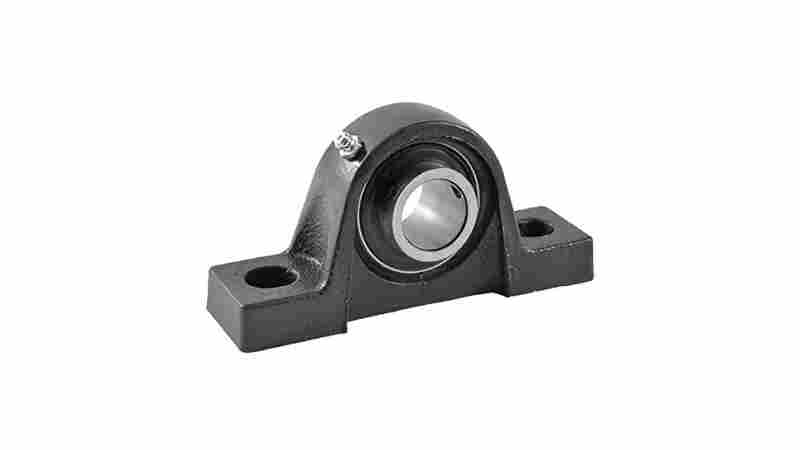
Cast iron and stainless steel represent two leading pillow block bearing material options for these bearings. Cast iron delivers superior rigidity and vibration damping, making it well-suited for heavy radial loads and moderate axial forces, especially where shock loading is common. Stainless steel provides reliable strength with a stronger emphasis on corrosion resistance rather than peak rigidity.
Durability varies by environment. Cast iron holds up well in dry or mildly aggressive settings but benefits from protective coatings in wet or chemical-heavy locations. Stainless steel excels with outstanding resistance to pitting and oxidation, even during frequent cleaning cycles or exposure to saline conditions. Both materials manage broad temperature ranges, though stainless versions often maintain stability better under extreme heat or cold. Cast iron’s natural damping properties further benefit moderate-speed, high-vibration machinery.
From a cost and weight perspective, cast iron units are more budget-friendly and provide a substantial base, while stainless steel options may carry a higher initial price but can reduce long-term maintenance needs. Typical applications for cast iron include conveyors, pumps, gearboxes, agricultural equipment, HVAC systems, and general manufacturing. Stainless steel units are preferred in food and beverage lines, pharmaceutical facilities, marine equipment, chemical plants, and any setting that prioritizes hygiene and corrosion protection.
The following comparison table summarizes key differences:
| Aspect | Cast Iron Pillow Block Bearings | Stainless Steel Pillow Block Bearings |
|---|---|---|
| Strength/Rigidity | High (excellent damping) | Good (less rigid than cast iron) |
| Corrosion Resistance | Moderate (improved with coatings) | Excellent |
| Cost | Lower | Higher |
| Weight | Heavier | Lighter |
| Best Applications | Heavy industrial, dry/dusty environments | Food processing, marine, chemical, washdown |
| Service Life (Harsh Env.) | Good with maintenance | Superior |
| Typical Grades | HT200, HT250, HT300 | 304 or 316 stainless |
This overview helps align pillow block bearing material selection with specific operational demands.
Housing material choices significantly influence friction levels, heat management, load handling, and overall resistance to wear, fatigue, and environmental stress in pillow block bearing design. Cast iron’s microstructure contributes natural lubricity and wear resistance, while stainless steel maintains performance even when exposed to corrosive conditions. Good thermal conductivity, as seen in cast iron, helps dissipate heat and protect lubricants, whereas differences in thermal expansion require careful consideration during high-temperature installations to prevent alignment problems.
Fatigue resistance becomes important under cyclic loading, where certain alloys or ductile materials provide better endurance. Vibration damping qualities in cast iron help lower noise and protect surrounding components. In aggressive chemical environments, thermoplastics often outperform metals by resisting acids and alkalis that would otherwise cause degradation.
Thoughtful pillow block bearing material selection, combined with appropriate design features, can extend service life substantially—sometimes doubling or tripling it in tough conditions—while reducing unplanned downtime. Lubrication compatibility and effective sealing further enhance these advantages.
Matching pillow block bearing material to the operating context improves reliability across industries. Agriculture and farming equipment often benefits from cast iron or ductile iron housings that withstand dust, moisture, and heavy loads in harvesters and conveyors. Food processing plants typically turn to stainless steel or thermoplastics that meet strict hygiene standards and tolerate frequent washdowns.
Mining and quarrying demand robust cast iron or cast steel solutions capable of handling extreme loads, constant vibration, and abrasive particles. Marine and offshore operations rely on stainless steel’s ability to resist saltwater corrosion. Packaging and automation lines favor lightweight thermoplastics or pressed steel for high-speed, lower-load precision work. HVAC systems and pumps commonly use economical cast iron in standard indoor settings.
LDK Bearings supplies tailored solutions for these varied sectors. You can browse their complete range of pillow block bearings and related products.
Several important elements should guide your decision when evaluating pillow block bearing material. The operating environment—temperature ranges, presence of moisture, chemicals, dust, or corrosives—sets the foundation. Load and speed profiles, including radial or axial forces, potential shock loads, and operating RPM, must be evaluated alongside shaft dimensions and any expected misalignment in pillow block bearing design.
Maintenance accessibility often favors materials that require minimal upkeep, such as stainless steel or thermoplastics. Budget considerations should include not just the purchase price but the total cost of ownership, factoring in reduced downtime and longer intervals between replacements. Regulatory requirements, such as FDA compliance or industry hygiene standards, may further narrow choices. Installation constraints related to weight and mounting footprint also deserve attention.
Working with knowledgeable suppliers and examining detailed specifications helps ensure the selected solution maximizes system reliability. For distributor information or local support, you can find contact details and locations.
Selecting the appropriate pillow block bearing material is a strategic decision that directly affects equipment performance, maintenance schedules, and productivity. By understanding the advantages of cast iron, stainless steel, thermoplastics, and other options alongside thoughtful pillow block bearing design considerations, you can choose components that deliver the best combination of strength, durability, and value for your needs.
LDK Bearings is a trusted manufacturer offering high-quality units across multiple material types, supported by strong engineering knowledge. Taking time to evaluate options carefully leads to fewer failures and smoother operations. Whether upgrading existing machinery or planning new installations, align your material and design choices with actual environmental and performance requirements for lasting results.
Cast iron is the most common due to its strength, vibration damping, cost-effectiveness, and suitability for a wide range of industrial applications.
Choose stainless steel in corrosive, wet, or hygienic environments such as food processing, marine, or chemical industries where rust resistance is essential.
Material properties like corrosion resistance, fatigue strength, and thermal stability directly impact durability. Matching the material to operating conditions can significantly extend service life and reduce maintenance.
Thermoplastics are better for light to medium loads, offering advantages in weight, corrosion resistance, and cleanliness rather than maximum strength.
Load, speed, environment, shaft size, alignment needs, and budget are primary considerations. Proper design integration ensures reliable performance.
Reputable manufacturers like LDK Bearings offer extensive options in cast iron, stainless steel, and more. Check their product catalog for detailed specifications.


