
Take up bearing units play a vital role in modern conveyor systems across industries such as mining, manufacturing, agriculture, and logistics. These adjustable mounted bearings help maintain proper belt tension, alignment, and overall operational efficiency. Their ability to allow precise shaft positioning and ongoing tension adjustments makes them essential for preventing common problems like belt slippage, mistracking, and accelerated wear.
This article explores how take up bearing units enhance conveyor performance while delivering long-term value. Drawing from practical applications and proven strategies, it offers actionable insights for system optimization. LDK Bearings supplies a full lineup of robust solutions built for tough industrial conditions.
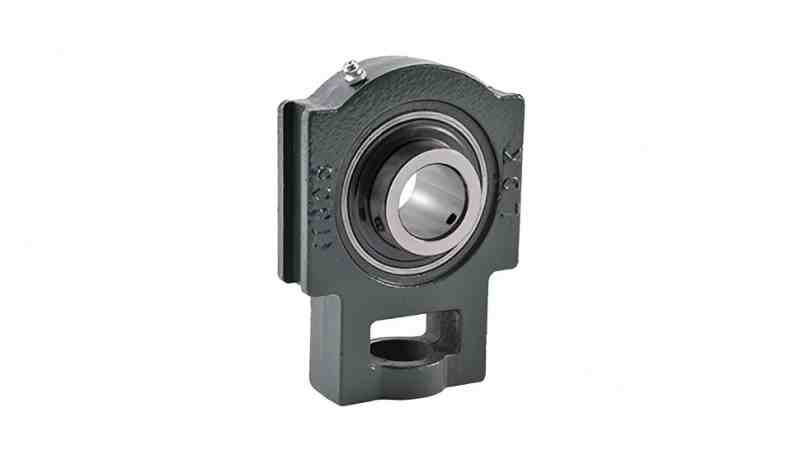
Take up bearing units support conveyor pulley shafts while permitting axial movement to accommodate tension needs. The corresponding take up bearing housing usually includes a slotted design, enabling the assembly to slide within a frame as the belt stretches, temperatures fluctuate, or loads change.
Positioned typically at the tail end of the conveyor, these units keep the belt in firm contact with the drive pulley for reliable power transfer. LDK Bearings develops high-quality take up bearing units with strong inserts and durable housings that perform smoothly even in heavy-duty or harsh settings. Discover the complete selection on the LDK Bearings products page.
When properly integrated, the take up bearing housing helps lower vibration, cut energy use, and prolong the life of connected components across the conveyor line.
Correct belt tension forms the foundation of efficient conveyor operation. As belts naturally stretch over time due to continuous use and environmental influences, take up bearing units prove invaluable for making small corrections without major disassembly.
The flexible design of the take up bearing housing accounts for expansion, material accumulation, or gradual wear. Appropriate tension avoids slippage while preventing overload that could harm the belt or joints. Many operations aim for 1-2% sag relative to center distance, a balance these units help sustain effectively.
Well-managed systems reduce elongation problems and promote even loading on idlers and pulleys, resulting in steadier material transport and fewer disruptions.
Good tension control significantly boosts belt tracking and cuts down on edge damage. Mistracking ranks among the top reasons for early belt failure, often leading to frayed sides, spillage, and higher power demands.
The take up bearing housing allows fine pulley adjustments that keep the belt running true along the frame. Minor tweaks often resolve tracking deviations and spread wear uniformly. This benefit stands out particularly on long or fast-moving conveyors where small misalignments can escalate rapidly.
The outcome is meaningful cost reduction. Optimized tension with quality take up bearing units frequently extends belt service life while lowering replacement needs for rollers and pulleys. LDK Bearings emphasizes advanced sealing and corrosion resistance to ensure dependable function in difficult environments.
Unexpected stoppages rank among the costliest challenges in material handling. Take up bearing units counter this through fast adjustments and streamlined upkeep. Their sliding design in the take up bearing housing simplifies releasing tension for belt changes or pulley work.
In the bigger picture, these units safeguard key parts by keeping tension steady, which reduces stress on bearings, shafts, and belting. Facilities often see notable gains in reliability after adopting high-quality take up bearing units.
LDK Bearings incorporates convenient grease points and secure locking systems that support longer maintenance cycles and greater overall uptime.
Multiple variables affect how take up bearing units perform in conveyor settings. Load and operating speed determine the need for suitably rated components to avoid early fatigue. Environmental challenges like dust, moisture, or extreme temperatures call for well-sealed or stainless options in the take up bearing housing. Careful installation, including correct frame alignment and initial lubrication, ensures smooth travel. Consistent inspection and lubrication schedules further extend usable life.
Recognizing these influences guides better decision-making when specifying equipment. LDK Bearings engineers its solutions to handle real-world demands while preserving easy adjustability.
** Screw Take-Up vs. Gravity Take-Up Systems**
| Feature | Screw Take-Up (with Take Up Bearing Units) | Gravity Take-Up | Key Advantage of Take Up Bearing Units |
|---|---|---|---|
| Tension Adjustment | Manual, precise increments | Automatic via counterweight | Easy fine-tuning |
| Space Requirements | Compact | Requires vertical space | Ideal for constrained layouts |
| Maintenance Frequency | Periodic checks | Lower ongoing adjustment | Simplified access |
| Suitability for Long Conveyors | Good for shorter to medium lengths | Excellent for very long runs | Cost-effective versatility |
| Cost & Installation | Lower initial cost | Higher due to structure | Faster setup |
This overview shows why screw-style systems with take up bearing units often provide an excellent balance of practicality and performance.
Selecting appropriate take up bearing units requires reviewing shaft size, load capacity, housing material, and seal type. Conveyor length, belt speed, and handled materials all play important roles in the decision. LDK Bearings offers multiple styles, from standard cast iron to stainless steel take up bearing housing, to suit varied requirements.
Effective maintenance involves routine checks for wear or sticking in the take up bearing housing, timely lubrication based on runtime and conditions, balanced adjustments on both sides for alignment, and watching for abnormal sounds or vibration. Working with knowledgeable partners and adhering to these steps helps maximize service life. Reach out through the LDK Bearings find us page for expert guidance.
Take up bearing units and their associated take up bearing housing are key to achieving superior conveyor belt performance and extended service intervals. They deliver consistent tension and alignment while reducing unplanned stops, bringing clear gains in productivity and cost control.
Choosing quality solutions from manufacturers like LDK Bearings supports lower maintenance expenses, longer belt life, and smoother daily operations. Whether modernizing current setups or planning new ones, focusing on these components leads to reliable, efficient conveying for the long term.
They adjust and maintain proper belt tension by allowing the pulley shaft to move axially within the take-up frame.
By enabling precise adjustments to pulley position, they help keep the belt centered and reduce edge wear and mistracking.
Cast iron is standard for general use, while stainless steel or thermoplastic options suit corrosive or food-grade environments.
Monthly visual checks and lubrication every 1,000-4,000 operating hours (depending on conditions) are typical recommendations.
Yes, with appropriate sealing and material choices like stainless steel, they perform reliably in dusty, wet, or high-temperature settings.
Screw systems with take up bearing units offer compact, manual adjustment, while gravity systems provide automatic tensioning for longer conveyors.


