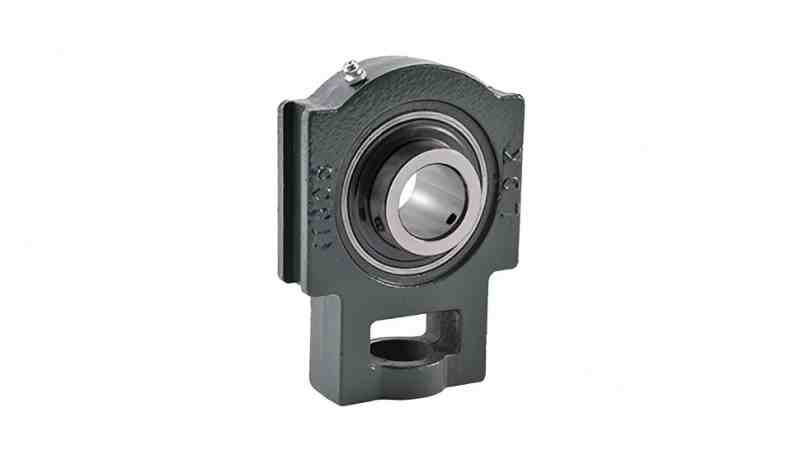
In many industrial systems, bearing reliability directly affects equipment stability, operating efficiency, and maintenance costs. A pillow bearing may appear to be a small mechanical component, but it plays an important role in supporting rotating shafts and maintaining smooth motion under continuous operating conditions.
During daily operation, bearings are exposed to changing loads, vibration, dust, moisture, and temperature variations. Without proper attention, these factors can gradually reduce performance and shorten service life. Regular maintenance allows operators to identify early signs of wear, maintain proper lubrication, and keep equipment running with fewer interruptions.
For machinery that uses a pillow block with bearing, maintenance is not limited to the bearing itself. The housing, mounting position, shaft alignment, and operating environment all influence the overall performance of the bearing assembly. With a practical maintenance plan, companies can improve equipment reliability while reducing unexpected downtime.
LDK Bearings understands the importance of dependable bearing performance in industrial applications. By combining suitable bearing selection with proper maintenance practices, users can achieve more stable operation and longer service intervals for their equipment.
A pillow bearing is designed to provide stable support for rotating shafts, but its performance depends heavily on operating conditions and maintenance quality. In continuous-duty machinery, bearing problems usually develop gradually rather than appearing suddenly. Changes such as increased vibration, unusual noise, or rising operating temperatures are often early indications that the bearing condition needs attention.
Regular maintenance helps maintenance teams detect these changes before they lead to major equipment problems. For example, a small lubrication issue can eventually cause excessive friction and heat, while minor alignment problems can create uneven loading and accelerate wear. Identifying these issues at an early stage allows corrective action before production efficiency is affected.
A well-maintained pillow block with bearing also helps protect other connected components. When the bearing assembly operates smoothly, shafts, drive systems, and rotating parts experience less stress, contributing to more consistent machine performance.
The relationship between maintenance and equipment performance can be summarized as follows:
| Maintenance Focus | Impact on Bearing Performance | Effect on Equipment |
|---|---|---|
| Lubrication control | Maintains smooth movement and reduces friction | Improves operating stability |
| Alignment inspection | Prevents uneven loading | Reduces premature wear |
| Condition monitoring | Identifies early signs of damage | Helps avoid unexpected downtime |
| Environmental protection | Limits contamination and corrosion | Extends component service life |
Maintaining a pillow bearing does not require complicated procedures, but it does require consistency. A good maintenance routine should focus on several key areas, including cleanliness, mounting condition, lubrication, and operating performance.
The surrounding environment has a direct influence on bearing life. In applications where dust, moisture, or industrial contaminants are present, regular cleaning and protection are necessary to prevent foreign particles from entering the bearing area. Contamination can damage internal surfaces and reduce the effectiveness of lubrication.
Mounting condition is another factor that should not be overlooked. A pillow block with bearing relies on correct installation and stable positioning to support the shaft properly. Loose mounting bolts, incorrect alignment, or excessive external forces can create additional stress on the bearing.
Routine checks should include observing operating noise, vibration levels, temperature changes, and any visible signs of damage. These simple inspections often provide valuable information about the condition of the bearing system.
When selecting replacement components or reviewing different bearing options, users can explore LDK Bearings’ bearing product range to compare suitable solutions based on application requirements, load conditions, and operating environments.
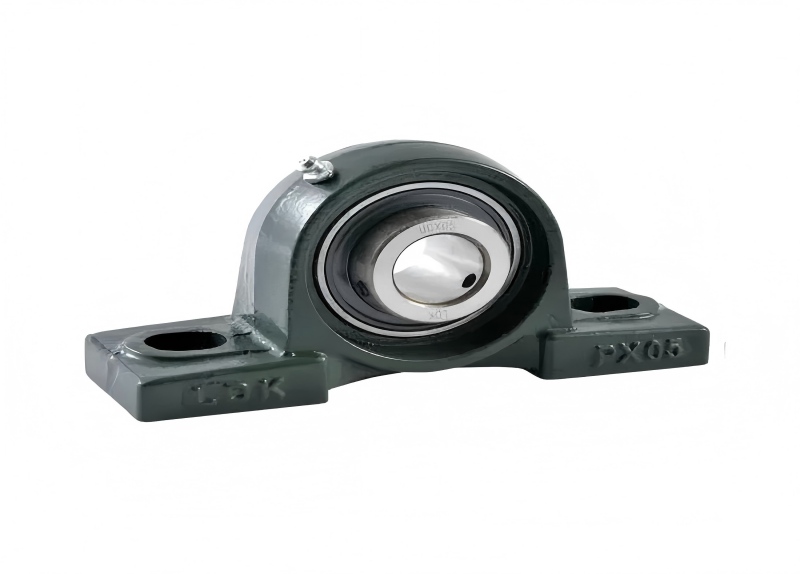
Lubrication is one of the most important factors affecting the performance of a pillow bearing. The lubricant creates a protective layer between moving surfaces, helping reduce friction and control heat generated during operation.
However, lubrication problems are not limited to insufficient lubricant. Using an unsuitable lubricant, applying too much grease, or allowing lubricant contamination can also negatively affect bearing performance. Excess lubricant may increase resistance, while contaminated lubricant can introduce particles that accelerate wear.
The correct lubrication approach depends on the application. Equipment operating under heavy loads, high speeds, extreme temperatures, or dusty conditions may require different maintenance intervals compared with standard operating environments.
| Lubrication Condition | Possible Result | Maintenance Consideration |
|---|---|---|
| Insufficient lubrication | Higher friction and temperature | Check lubricant level and schedule |
| Excessive lubrication | Increased resistance and heat | Apply the recommended amount |
| Contaminated lubricant | Accelerated internal wear | Inspect lubricant condition regularly |
| Incorrect lubricant selection | Reduced bearing efficiency | Match lubricant to operating conditions |
A consistent lubrication program allows a pillow bearing to maintain smooth operation over a longer period and reduces the likelihood of unexpected failures.
Even durable bearing assemblies can experience problems when operating conditions exceed their design limits or maintenance is neglected. Understanding common failure symptoms helps users take action before damage spreads to other machine components.
One common issue is excessive vibration. This may result from shaft misalignment, loose installation, uneven loading, or bearing wear. If vibration continues for an extended period, it can affect both the bearing and surrounding mechanical parts.
Overheating is another warning sign. A temperature increase may indicate insufficient lubrication, excessive friction, overload conditions, or contamination. Investigating the cause early can prevent more serious damage.
For a pillow block with bearing, users should also pay attention to housing condition and mounting stability. Cracks, corrosion, or looseness in the housing can influence the overall reliability of the bearing system.
Routine inspection provides valuable information about the condition of a pillow bearing before a failure occurs. Instead of replacing components only after a breakdown, maintenance teams can use inspection results to plan repairs and reduce production interruptions.
During inspection, operators typically review several conditions, including bearing temperature, vibration behavior, lubrication status, mounting tightness, and overall equipment performance. Any unusual change compared with normal operating conditions should be investigated.
For larger industrial systems, condition monitoring tools can provide additional insight into bearing health. Vibration analysis and temperature monitoring help identify patterns that may indicate developing problems.
Choosing and maintaining the right pillow block with bearing requires an understanding of application conditions, installation requirements, and expected operating demands. LDK Bearings provides technical support for customers evaluating bearing solutions, and users can reach the team through its contact information when additional guidance is needed.
Effective maintenance of a pillow bearing contributes to more than preventing failures. It also improves overall machinery efficiency by helping rotating components operate with less resistance and greater stability.
When a bearing assembly is properly maintained, equipment can achieve more predictable performance, fewer unexpected stops, and improved operational consistency. This is particularly important in production environments where even short interruptions can affect efficiency and operating costs.
A reliable pillow block with bearing should be viewed as part of a complete mechanical system. Proper selection, correct installation, and ongoing maintenance work together to maximize equipment performance and extend service life.
Maintaining a pillow bearing properly is essential for keeping industrial equipment operating efficiently and reliably. Regular inspection, suitable lubrication practices, contamination control, and attention to installation conditions all contribute to longer bearing life and improved machinery performance.
Whether used in conveyors, manufacturing equipment, agricultural machinery, or other rotating systems, a well-maintained pillow block with bearing can reduce downtime and support stable operation. By applying practical maintenance strategies and selecting suitable bearing solutions from trusted suppliers such as LDK Bearings, companies can achieve better equipment reliability and long-term operational value.
Inspection frequency depends on operating conditions, load, speed, and environment. Equipment running continuously or under harsh conditions usually requires more frequent checks.
Common signs include unusual noise, increased vibration, higher operating temperature, lubricant leakage, and reduced machine performance.
Proper lubrication reduces friction, controls heat, minimizes wear, and helps the bearing maintain reliable performance over time.
Yes. Poor alignment, loose mounting, or incorrect fitting can create uneven loads and shorten the service life of the bearing assembly.
Common causes include insufficient lubrication, contamination, excessive loads, misalignment, and lack of regular inspection.
Selection should consider shaft size, load requirements, operating speed, environmental conditions, and the specific needs of the equipment.