
Agricultural equipment places bearings in working conditions that are difficult to reproduce in a clean industrial environment. Soil, crop residue, moisture, vibration, shock loads and seasonal operating cycles can all affect bearing performance. For this reason, selecting agricultural wheel bearings involves more than matching an outside diameter or choosing a bearing that fits the available space.
One specification that is often overlooked is bore geometry. Round, square and hex bore bearings are designed to interface with different shaft configurations, and each design can simplify installation or improve compatibility in particular agricultural equipment. However, bore shape alone does not determine which bearing is stronger or more durable. The correct choice depends on the shaft, mounting arrangement, sealing system, lubrication strategy and operating environment as a complete system.
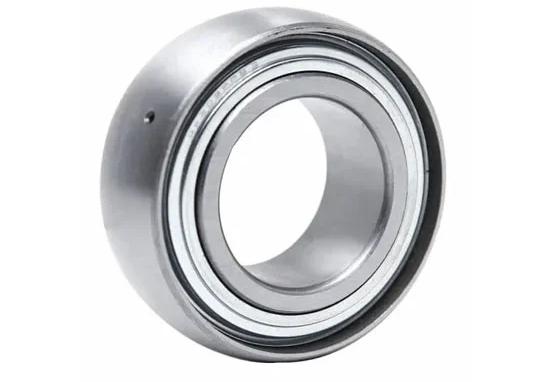
Round, square and hex bore agricultural bearings differ primarily in how the bearing interfaces with the shaft and how the equipment designer intends the bearing to be mounted.
A round bore is designed for a conventional cylindrical shaft. This is a familiar configuration across agricultural and industrial equipment and can be useful where the machine already uses standard round shafting. Depending on the bearing design, proper fit and a suitable locking or retaining arrangement are important for maintaining the intended relationship between the bearing and shaft.
Square bore bearings fit corresponding square shafts commonly found in certain farm implements. The matched geometry creates a direct mechanical interface between the shaft and bearing bore. Hex bore bearings apply the same general principle to a hexagonal shaft and can provide straightforward mounting where the equipment has been designed around this shaft profile.
The important point is that the bore should normally be selected to match the machine design rather than treated as an independent performance upgrade. Changing from a round bore to a square or hex bore does not automatically increase bearing load capacity. Overall performance still depends on bearing dimensions, internal design, material, lubrication, sealing and the actual loads generated by the equipment.
| Bore Type | Typical Shaft Interface | Selection Consideration | Common Agricultural Use |
|---|---|---|---|
| Round Bore | Cylindrical shaft | Compatible with conventional round shaft arrangements | General farm implements, wheels, rollers and rotating components |
| Square Bore | Square shaft | Matches equipment specifically designed around square shafting | Tillage, seeding and other farm implement applications |
| Hex Bore | Hexagonal shaft | Direct fit to matching hex shafts and convenient mounting in suitable equipment | Farm implements using hex shaft systems |
Round bore bearings are a practical choice when agricultural machinery uses conventional cylindrical shafts and requires a straightforward bearing-to-shaft interface.
Because round shafts are widely used in rotating equipment, round bore agricultural bearings can be found in many types of farm machinery. Depending on the equipment design, they may support wheels, rollers or other rotating components used on planters, tillage equipment, harvesting machinery and related implements.
For agricultural wheel bearings, however, shaft compatibility is only the starting point. Field equipment frequently operates close to soil and crop residue, where abrasive contamination can reach the bearing area. Moisture from rain, irrigation or equipment washing can create an additional challenge. A bearing with the correct bore but an unsuitable sealing arrangement may still experience shortened service life.
LDK's round bore farm implement bearing range uses triple-lip sealing in designated series, providing an additional barrier against lubricant loss and the entry of wet or abrasive contaminants. Some LDK round bore agricultural bearing products are designed as non-relubricatable units, making them suitable for applications where the equipment design favors a sealed bearing with simplified routine maintenance.
When specifying a round bore bearing, buyers should therefore confirm not only the shaft diameter but also the expected contamination level, duty cycle, available installation space and maintenance strategy.
Square and hex bore bearings are intended for machinery built around matching non-round shafts, allowing the bore geometry to become part of the mounting and drive arrangement.
Square shafts are used in various agricultural implements where a positive geometric connection is useful. A square bore bearing can fit directly around this shaft profile without requiring the machine designer to convert the mounting point to a conventional round shaft. LDK's square bore farm implement bearing range includes triple-lip sealed designs for contaminated agricultural environments.
Hex bore bearings serve a similar purpose on equipment built with hexagonal shafting. Their value is less about being universally better than round bore bearings and more about matching the mechanical architecture of the implement. LDK's agricultural bearing range includes hex bore designs that are relubricatable and intended for convenient mounting.
This distinction matters when sourcing replacement agricultural wheel bearings or bearings for older farm machinery. A buyer should not choose between round, square and hex bores based on appearance or assumed strength. The existing shaft profile, dimensions and equipment arrangement should be identified first. Even small differences in bore geometry or size can make an otherwise suitable bearing incompatible with the machine.
For OEM projects, bore selection should ideally be considered during equipment design. This makes it possible to coordinate the shaft geometry, bearing dimensions, sealing approach and maintenance requirements instead of treating the bearing as an isolated component.
The correct agricultural bearing is determined by the complete operating system, including shaft design, contamination exposure, load, speed and maintenance requirements.
The first question should be simple: what shaft does the bearing need to fit? If an existing machine uses a square or hex shaft, retaining that geometry may simplify replacement and preserve compatibility with surrounding components. For a new equipment design, engineers have more freedom to evaluate which shaft and bearing arrangement best supports manufacturing, assembly and maintenance requirements.
Environmental exposure deserves equal attention. Agricultural equipment may operate for long periods in dusty fields and then encounter mud or moisture within the same working season. Sealing should therefore be evaluated alongside bore geometry. The objective is not simply to keep visible dirt away from the raceway but to maintain lubrication while limiting the entry of abrasive or wet contaminants.
Lubrication strategy is another practical consideration. Some applications benefit from relubricatable bearings because scheduled greasing is already part of the equipment maintenance program. Other machines may be better suited to sealed, non-relubricatable designs where access is limited or simplified maintenance is preferred.
Loads and operating speed also need to be checked independently of bore shape. Wheel loads, implement weight, field impact and changes in operating direction can create different combinations of radial and axial forces. Selecting a square or hex bore does not remove the need to verify the bearing's load rating and dimensions against the actual application.
For buyers comparing multiple bearing configurations, LDK's broader bearing product range provides additional mounted bearings, bearing inserts and agricultural bearing options that can be evaluated according to equipment requirements.
LDK provides multiple agricultural bearing configurations so OEMs, distributors and equipment users can select a bearing around the machine's shaft design and operating environment.
The company's agriculture bearing range includes round bore, square bore and hex bore farm implement bearings as well as disk harrow bearing units. This provides options for different shaft arrangements instead of forcing one bore configuration across every application.
Disk harrows demonstrate why this flexibility matters. Bearings used close to tillage components can face continuous exposure to dust, soil and vibration. LDK offers disk harrow units with multiple bore configurations and sealed designs, with relubricatable and non-relubricatable options available depending on the specific product.
For OEM development or replacement sourcing, the most useful approach is to provide more than a part number. Shaft dimensions, application, operating environment, radial and axial loads, speed and maintenance requirements can help narrow the selection and reduce the risk of choosing a bearing that fits physically but is poorly matched to the machine.
This engineering information becomes particularly important when an existing bearing is being replaced with an alternative series or when agricultural machinery is being redesigned for a different operating environment.
There is no single bore shape that is best for every agricultural machine. Round bore bearings work naturally with conventional cylindrical shafts, while square and hex bore designs support equipment built around corresponding shaft profiles. The right choice begins with mechanical compatibility and then extends to sealing, lubrication, load, speed and maintenance conditions.
For agricultural wheel bearings, this system-level approach is especially important because field conditions can combine contamination, moisture, impact and demanding seasonal operation. Choosing a bearing only by bore size can overlook the factors that ultimately determine reliable service.
LDK offers round, square and hex bore agricultural bearings together with disk harrow units and other bearing solutions for farm equipment. For OEM projects, replacement requirements or application-specific bearing selection, buyers can contact LDK with their shaft dimensions, equipment application and operating requirements to discuss an appropriate bearing configuration.
There is no universally best bore type. The bearing bore should first match the shaft geometry and mounting design of the equipment. Round bores suit cylindrical shafts, while square and hex bores are intended for corresponding non-round shafts. Sealing, lubrication, load and operating conditions should then be evaluated before the final bearing is selected.
Not necessarily. Bore shape mainly defines how the bearing interfaces with the shaft. Load capacity depends on the complete bearing design, dimensions, internal construction and operating conditions. A square or hex bore should therefore not be selected solely on the assumption that it can carry more load.
Agricultural machinery commonly operates around soil, abrasive dust, crop residue and moisture. An effective seal helps retain lubricant and limit contaminants from entering the bearing. For equipment operating close to the ground, sealing can be just as important as selecting the correct bore and bearing dimensions.
It depends on the maintenance strategy and operating environment. Relubricatable bearings can be useful where scheduled greasing is practical and contamination exposure is high. Non-relubricatable sealed bearings may be appropriate when maintenance access is limited or the equipment is designed around simplified servicing. The correct choice should follow the bearing manufacturer's specifications and the requirements of the machine.


