Choosing a pillow block bearing supplier involves more than finding a factory that can quote the required UCP series. For OEMs, distributors and industrial equipment manufacturers, consistency between batches, housing quality, insert bearing performance, shaft locking options and technical support can all influence the total cost of sourcing.
This makes comparing pillow block bearing manufacturers different from comparing individual bearing prices. Two products may share the same basic dimensions while differing in casting quality, machining consistency, grease selection, bearing insert construction or process control.
A useful supplier evaluation should therefore look at the complete manufacturing system behind the finished bearing unit. Product range matters, but buyers should also examine how housings are produced, how incoming materials are controlled, what locking and lubrication configurations are available, and how finished products are verified before shipment.
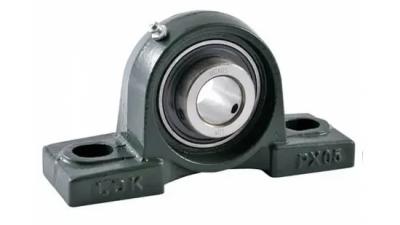
A capable pillow block bearing manufacturer should offer enough configurations to match different load, shaft, installation and maintenance requirements rather than relying on one standard unit for every application.
Pillow block bearings combine a pedestal-style housing with an insert bearing, but the category includes multiple duty levels and locking arrangements. A supplier serving industrial OEMs should therefore be able to explain the differences between available series instead of selecting only by shaft diameter.
For example, an equipment design intended for moderate service may not require the same housing and insert configuration as a machine exposed to heavier loading. Similarly, a set screw insert may suit one shaft arrangement while an eccentric collar, adapter sleeve or concentric locking design is more appropriate elsewhere.
Material selection also expands the sourcing decision. Conventional cast iron housings are widely used, while ductile iron or other housing materials may be specified when the application requires different mechanical properties. Environmental conditions can lead buyers toward stainless steel or thermoplastic mounted units rather than a conventional painted cast housing.
Before requesting quotations, OEM buyers should define the application, shaft size, expected loading, speed, environment and preferred locking arrangement. This makes it easier to compare manufacturers on equivalent specifications rather than receiving several quotations for technically different products.
Housing appearance alone does not reveal whether the casting, machining and dimensional control behind a pillow block bearing are consistent.
The bearing housing forms the structural connection between the rotating insert and the machine frame. Casting defects, inconsistent material composition or poor machining can therefore affect fit and repeatability even when the exterior paint looks acceptable.
When evaluating pillow block bearing manufacturers, OEM buyers can ask how raw materials are verified before casting, whether molten metal composition is checked, and which inspections are performed before housings move into machining. Machining processes should then control the critical surfaces that determine how the bearing insert sits in the housing and how the complete unit mounts to the equipment.
It is also useful to determine how much of the process is performed by the manufacturer itself. An integrated factory can have direct control over more production stages, while a heavily outsourced supply chain requires strong incoming inspection and supplier management to achieve similar consistency.
Neither manufacturing model should be judged solely by marketing claims. Buyers should request evidence such as process information, inspection capabilities, material records and sample evaluation where the sourcing project justifies it.
The housing is only half of a pillow block unit; the bearing insert and its connection to the shaft are equally important to application performance.
Different shaft locking systems solve different installation problems. Set screw locking is common and straightforward. Eccentric locking collars provide another mechanical approach to securing the insert, while adapter sleeves can be useful with compatible tapered-bore bearing arrangements. Concentric locking systems provide a different shaft clamping method where that configuration is preferred.
Manufacturers with a broader insert portfolio can give OEMs greater flexibility without requiring a complete housing redesign whenever the shaft locking requirement changes.
Lubrication should also be part of the quotation discussion. The correct grease depends on operating temperature, speed, load and environmental requirements. Food processing equipment, high-temperature machinery and conventional industrial equipment may therefore require different lubricant specifications.
The same applies to protective accessories. If dust or other external contamination is significant, suitable end covers may be considered where compatible with the housing design.
| Supplier Capability | Why It Matters to Buyers | What to Confirm |
|---|---|---|
| Multiple duty series | Allows selection around different application loads | Available series and technical specifications |
| Housing material options | Supports different mechanical and environmental requirements | Material specification and manufacturing control |
| Multiple locking systems | Improves compatibility with different shaft designs | Set screw, eccentric, adapter or concentric options |
| Lubrication options | Helps adapt the bearing to operating conditions | Grease specification and application limits |
| Testing and inspection | Supports repeatable production quality | Incoming, in-process and final inspection procedures |
Reliable bearing production depends on controlling variation throughout manufacturing rather than attempting to identify every problem after the unit has already been assembled.
For B2B buyers, this is one of the most useful distinctions between quotations that otherwise look similar. Incoming materials should be verified before production. Critical dimensions should be monitored during machining and bearing production. Finished units then require appropriate final inspection before shipment.
A manufacturer serving OEM programs may also need documented quality procedures, measurement equipment, material analysis capability and traceability. Automotive-related or other tightly controlled supply programs may require additional documentation such as PPAP, depending on the customer's quality system and project requirements.
Testing capability can add further confidence, particularly when a new application or customized bearing configuration is involved. Depending on the bearing and project, relevant evaluations may include load-related testing, fatigue performance, noise and vibration, material verification or corrosion testing.
Buyers do not necessarily need every test for every purchase order. The more important question is whether the manufacturer has an established method for verifying the characteristics that are critical to the specific application.
For recurring industrial sourcing, the best supplier relationship is built around repeatability and technical communication rather than a successful first sample alone.
A sample order proves that a manufacturer can produce a particular unit once. OEM buyers also need to know whether the same specifications can be maintained across subsequent production batches.
This becomes more important when a project requires customized grease, housing color, end covers, special labeling, alternative materials or non-standard component combinations. Each customization adds variables that must be controlled through purchasing, production and inspection.
Documentation should therefore be agreed before mass production. Drawings, approved samples, material requirements, packaging instructions and any critical dimensional tolerances can form a shared technical reference between buyer and supplier.
Traceability is also valuable when investigating a field issue. Being able to connect a finished bearing to an identifiable production batch helps both parties analyze the problem more efficiently instead of treating every unit as an unknown component.
Buyers who need different mounted bearing configurations can review the manufacturer's product portfolio to determine whether related housing, material and locking requirements can be sourced within the same supply system.
The lowest quoted bearing price does not necessarily represent the lowest sourcing cost when quality variation, replacement work, inspection effort and supply risk are considered.
For distributors, inconsistent product quality can create returns and customer complaints. For equipment manufacturers, an unsuitable or inconsistent bearing can interrupt assembly, increase inspection requirements or create field service work. These costs can quickly outweigh small differences in purchase price.
A better comparison asks whether each quotation represents the same housing material, bearing insert, locking system, grease, accessories, inspection level and packaging requirement. If specifications differ, the price comparison is incomplete.
Technical responsiveness also has commercial value. When an application changes or a customer reports an operating problem, access to a manufacturer that understands the bearing design can help determine whether the issue relates to selection, installation, lubrication, environment or the component itself.
For recurring OEM orders, buyers can therefore evaluate manufacturers across three areas at the same time: product suitability, process consistency and supply support. This creates a more useful sourcing decision than ranking suppliers by unit price alone.
Comparing pillow block bearing manufacturers requires looking behind the catalog. A suitable supplier should be able to support different duty levels, housing materials, insert designs and shaft locking methods while maintaining control over manufacturing and inspection.
Quality systems, material verification, in-process inspection and testing capabilities become particularly important for OEM and recurring industrial orders, where consistency across production batches matters as much as the approval sample.
LDK manufactures a broad range of mounted bearing units, including normal, medium and heavy-duty pillow block configurations, with multiple insert locking and lubrication options. Its production system covers bearing housing manufacturing, insert bearing processing and quality inspection, while its quality system supports OEM documentation requirements such as PPAP Level 3. Buyers evaluating a new pillow block bearing sourcing project can contact LDK with their bearing series, shaft dimensions, application conditions and annual demand for a more application-specific discussion.
Evaluate the manufacturer's product range, housing and bearing materials, shaft locking options, lubrication capabilities, manufacturing processes and quality control system. For recurring OEM orders, customization, documentation, traceability and batch consistency should also be considered.
Provide the bearing designation or required dimensions together with shaft size, application, load, speed, operating temperature and environment. If special grease, housing material, end covers, labeling or packaging are required, include these requirements in the RFQ so quotations can be compared on the same technical basis.
Not necessarily. Dimensional compatibility is only one factor. Bearing insert design, load rating, shaft locking method, housing material, seal configuration and lubrication can differ between products. These specifications should be checked before replacing one manufacturer's unit with another.
Many characteristics of a bearing unit are created before final assembly, including material properties, casting quality, machined dimensions and bearing component geometry. In-process inspection helps identify variation at the stage where it occurs rather than relying only on final inspection to detect completed defective units.